



App Development Companies in Dubai: UAE Market Intelligence 2026.
2026 analysis of app development companies in Dubai and the UAE: market size, demand, talent, and free-zone entry.

App Development Companies in Dubai: UAE Market Intelligence 2026.
People, not platforms, dictate the pace of Dubai's software market. While the regional narrative focuses heavily on vendor selection and technical stack choices, the underlying search data paints a vastly different picture. A comprehensive analysis of over half a million monthly search signals reveals that the real challenge lies in talent acquisition rather than simple procurement.
Specifically, the UAE technology market exhibits a massive structural asymmetry, with IT recruitment queries generating over 100,000 monthly searches. By contrast, direct commercial queries for an app development company in the UAE or web design services attract only a fraction of that volume. This staggering eightfold difference indicates that organisations are struggling to build internal capabilities in an increasingly competitive environment.
For international founders and technical decision-makers, navigating this landscape requires moving past superficial agency directories. Dubai dominates nearly 78 per cent of the regional software search volume, establishing itself as the primary gateway for digital expansion in the Middle East. However, establishing a sustainable presence requires a granular understanding of local free zones, regulatory compliance, and regional talent dynamics.
Evaluating the market demands a partner with deep architectural expertise and a structured approach to digital delivery. Arch brings over two decades of global engineering experience, helping teams navigate mobile app development and cross-platform architecture. By prioritising a discovery-first methodology, engineering teams can validate complex product requirements before committing to long-term regional development cycles.
Key Findings
- Dubai dominates the software search ecosystem by commanding approximately 78 per cent of all high-volume market signals, designating the emirate as the primary geographical focus for software-relevant entry.
- Talent acquisition represents the primary structural bottleneck, evidenced by 100,000 monthly IT recruitment search signals compared to a software vendor search volume capped at 5,000.
- The mobile application development segment offers an accessible market opening with 74,150 monthly search signals at a low competition score of 14.6, currently underserved by specialised domestic firms.
- Stringent regulatory standards governed by the Dubai International Financial Centre and Abu Dhabi Global Market channel substantial software enterprise budgets into compliance-driven sectors.
- A critical information deficit exists regarding structural cost transparency, leaving procurement teams without reliable local benchmarks for project budgets, developer day rates, and long-term total cost of ownership.
The size of the UAE software market: what 566,800 monthly buyer intent signals actually measures
People, not platforms, dictate the pace of Dubai's software market. Of the 566,800 monthly buyer intent signals captured across 959 unique terms, the densest segment relates to hiring internal staff rather than external agencies. This workforce acquisition drive accounts for a disproportionate share of local search volume.
IT recruitment in Dubai alone carries 100,000 monthly search signals, whereas the vendor procurement segment is capped at 5,000. This stark talent asymmetry represents a structural reality that shapes every commercial dynamic across the United Arab Emirates. It dictates everything from the tiered vendor ecosystem to the deep relationship dependencies governing local enterprise procurement.
Search data points to seven distinct software-relevant segments operating across the region. Within these categories, Dubai commands approximately 78 per cent of total demand in the higher-volume search brackets. Specifically, mobile development demand accounts for 26,000 monthly signals, website development for 32,500, and specialised web applications for 20,000.
In contrast, Abu Dhabi contributes a quieter 3,000 monthly signals across web and mobile queries, while Sharjah adds roughly 1,000. A residual country-wide segment of approximately 1,000 rounds out the national picture. This high geographic concentration indicates a highly centralised software economy centred on a single emirate.
Official revenue projections confirm the immense scale of this regional market. The enterprise software market in the region generated USD 4,019.8 million in 2025, with projections reaching USD 11,042.5 million by 2033. Additionally, the broader business software market is expected to reach USD 5.2 billion by 2030, representing a compound annual growth rate of 12.5 per cent.
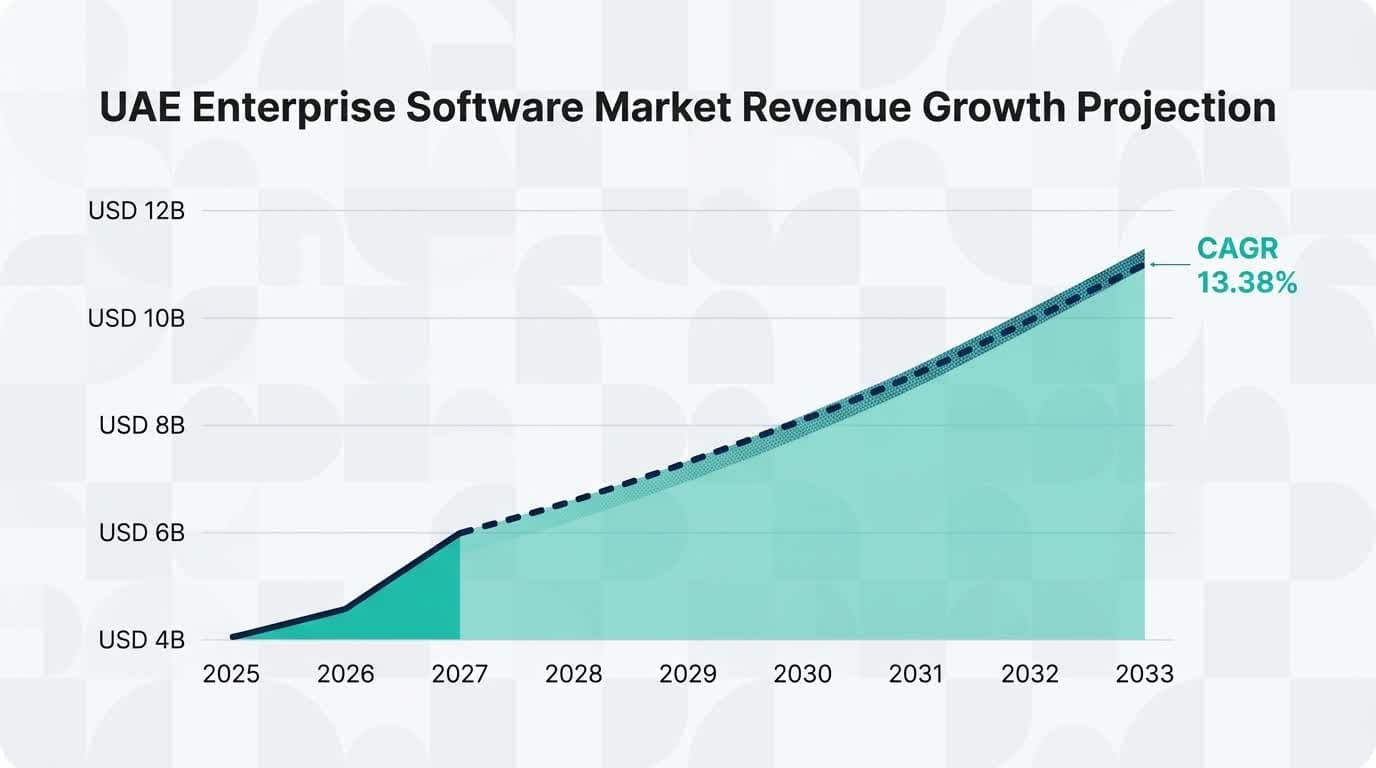
These volumes establish the country as the largest domestic software market in the Middle East. The surrounding regional software landscape itself reached a valuation of USD 13.6 billion in 2024. This expanding ecosystem offers substantial scope for technical organisations scaling across both enterprise and mid-market tiers.
For international partners evaluating entry, understanding the wider technology expenditure framework is vital. Custom software represents a significant but non-dominant portion of overall technology spending, which remains heavily weighted towards hardware and infrastructure. The digital transformation segment represents an additional USD 1.82 billion in 2026, projected to reach USD 3.75 billion by 2031 at a growth rate of 15.62 per cent.
Organisations across the region are actively commissioning large-scale transformation programmes requiring custom engineering and system integration. This procurement activity reflects concrete operational requirements rather than superficial exploration. The market demands complex, highly integrated solutions that align with local regulatory frameworks.
Fintech represents the most highly capitalised vertical segment within this digital landscape. The broader financial technology sector, encompassing payment infrastructure and banking software, was valued at USD 52.07 billion in 2026. This ecosystem is projected to reach USD 90.06 billion by 2031, growing at an annual rate of 11.58 per cent.
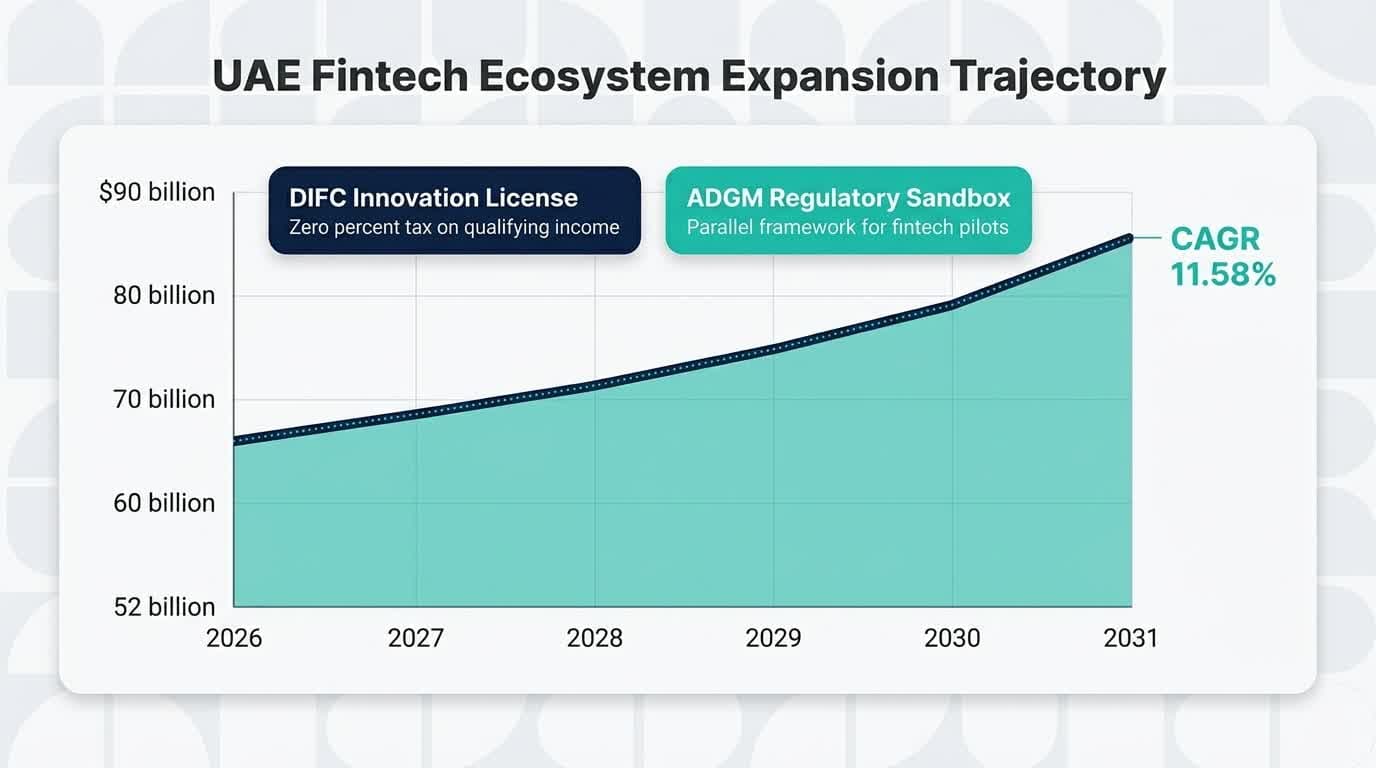
While this valuation covers the entire financial ecosystem, the software engineering component represents a substantial share of the total addressable market. High-compliance software, secure transactional platforms, and integrated banking structures demand substantial custom development. This specialised activity drives genuine procurement queries from sophisticated corporate buyers.
Abu Dhabi and Sharjah: the quieter emirates
Abu Dhabi and Sharjah occupy distinct operational niches that complement Dubai's high-volume market. Abu Dhabi generates approximately 3,000 monthly buyer search signals, a figure that fails to capture the true scale of capital expenditure. The capital focuses heavily on institutional, state-backed contracts with long procurement cycles but substantial project values.
The emirate houses specialised tech hubs such as twofour54 and the Abu Dhabi Global Market, which manages its own regulatory sandbox. Government-linked enterprises, including the Abu Dhabi Digital Authority, routinely commission custom architectures for smart-city infrastructure and healthcare digitisation. These projects are backed by sovereign wealth, providing high financial stability for technical partners.
Sharjah presents a different proposition, generating roughly 1,000 monthly search signals. The Sharjah Research Technology and Innovation Park offers a competitive free zone alternative for founders seeking lower operational overheads. The local demand profile is highly focused on educational technology, clinical software, and municipal services.
For external development partners, Sharjah represents a viable base when targeting public institutions or academic buyers. The administrative setup is often faster and less costly than mainland alternatives. It serves as an excellent operational anchor for teams focused on public-sector digitisation.
A comparative analysis of the three major emirates highlights distinct commercial environments for tech firms. Each region demands a tailored procurement and operational strategy.
- Dubai: 78 per cent of search demand, rapid procurement cycles, deep vendor ecosystem, and prominent aggregator presence.
- Abu Dhabi: 3,000 monthly intent signals, extended procurement cycles, larger contract scale, and sovereign-backed buyers.
- Sharjah: 1,000 monthly intent signals, highly competitive cost base, and concentration in education and healthcare sectors.
The app development segment: why established companies in Dubai face low competitive intensity
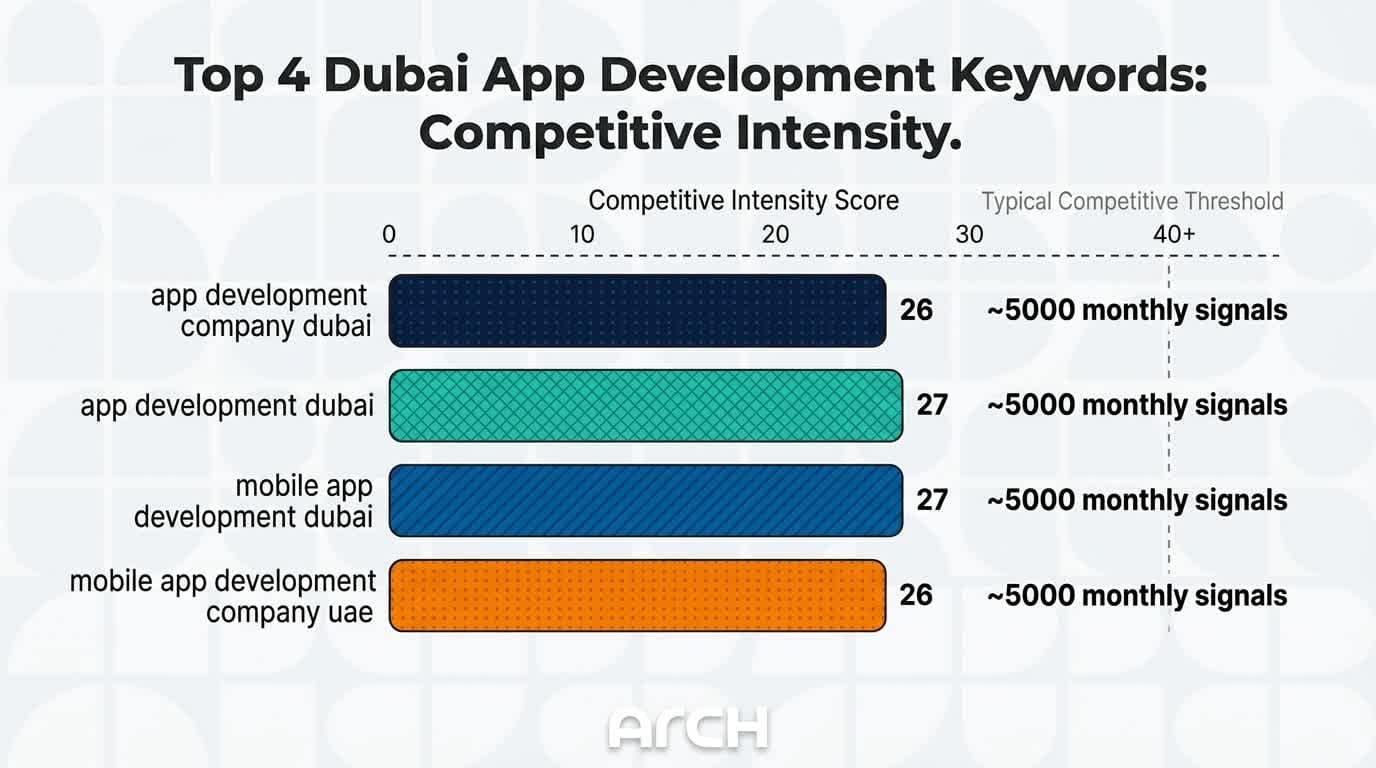
The UAE app development segment commands 74,150 monthly buyer intent signals, yet competitive intensity averages a remarkably low 14.6. By comparison, competitive intensity metrics across other software segments regularly exceed 40 and 50. A score of 14.6 against this volume represents one of the cleanest market opportunities in the dataset, with Dubai alone generating 26,000 signals.
This local demand is distributed across eight individual search terms running at approximately 5,000 signals each. The primary drivers are `app development company dubai` (with a competitive intensity score of 26), `app development dubai` (27), `mobile app development dubai` (27), and `mobile app development company uae` (26).
These four terms alone carry sufficient volume to anchor a robust market engagement strategy. Despite this high concentration of interest, the local competitive landscape remains notably thinner than in most comparable global tech hubs.
An analysis of search engine results for these queries reveals an unexpected market structure. Rather than a landscape of established regional firms with deep local portfolios, the first page is dominated by offshore agencies and recruitment intermediaries. For instance, community discussions on Quora regarding how to hire developers in Dubai consistently recommend relying on recruitment agencies, checking external portfolio websites, or starting with small trial projects to assess capability [1].
This hiring-through-agency pattern appears repeatedly across various talent databases, where major recruitment agencies are cited as primary channels for sourcing front-end developer roles in the region [3]. Consequently, the buyer journey for mobile app development Dubai services is often mediated through recruitment intermediaries who act as informal quality filters. This structural reliance on intermediaries highlights a profound trust gap in an otherwise opaque procurement market.
This offshore dominance is not merely a ranking artefact but reflects a structural characteristic of how the regional market operates. Local software companies face persistent talent shortages, growing skills gaps, and complex regulatory compliance requirements [6]. Additionally, rising operational costs and constant pressure to innovate continue to squeeze margins for onshore businesses [6].
These challenging conditions allow intermediaries to thrive by offering a proxy for trust in a fragmented supply market. In the absence of reliable signals, online forum threads effectively serve as informal procurement guides for prospective buyers. This occurs not because these threads are highly authoritative, but because established technical partners have yet to publish comprehensive, data-driven alternatives.
While competitive intensity metrics for core search terms sit between 26 and 27, this low competition masks a deeper dynamic at the premium end of the market. Community discussions on forums such as Reddit reveal that buyers seeking enterprise-level partnerships are explicitly searching for partners with documented track records, transparent pricing structures, and comprehensive full-stack expertise [5].
A clear tension exists between the buyer demand for transparent histories and the opaque channels through which recommendations are currently sought. This gap between buyer expectations and market reality represents a substantial opportunity for professional software engineering firms.
A few specific providers, such as ITC Infotech, Emonics, and UAE Software Solutions, frequently surface within these informal community discussions [7]. These organisations are often recommended to international businesses seeking app development company UAE partnerships [7].
Other recommendations highlight players like Efforts Solutions, which is noted for its multi-decade presence in the regional market [1]. Notably, these brands gain visibility through informal, peer-to-peer reputation rather than targeted content marketing or structured search engine campaigns.
This pattern serves as valuable market data in its own right. It demonstrates that current visibility in this segment is driven by historic reputation and community presence rather than sophisticated, content-led client acquisition.
The standard buyer journey in Dubai follows a highly predictable path from initial search to final vendor contact. Initial searches typically return forum threads and recruitment sites rather than specialist agency platforms, nudging buyers toward recruitment intermediaries for quality assurance. The low competitive intensity indicates that few established technical partners have structured their digital presence to capture this traffic directly.
This dominance of offshore agencies leaves a clear opening for organisations that are willing to publish with absolute clarity regarding engineering processes, case studies, and transparent cost models. With 74,150 monthly buyer signals in the segment and a remarkably low competitive score, the opportunity for structured market entry is highly compelling.
The web/website development segment: the broadest demand and the WordPress-versus-custom split
Among the software segments analysed for the UAE market, the web and website development segment carries the highest demand volume, at 134,500 queries per month with an average competitive intensity of 18.7. Dubai anchors this segment with two distinct high-volume nodes, namely Dubai Website Development at 32,500 monthly buyer intent signals, and Dubai Web Development at 20,000. This massive volume indicates a digital landscape where enterprises across sectors are actively establishing or refining their digital infrastructure.
The breadth of this search activity reflects a market where businesses are transitioning from basic web presences to highly complex web applications. Consequently, demand is split between simple informational portals and fully bespoke custom platforms. This creates a highly fragmented vendor landscape that caters to wildly different functional expectations.
The WordPress-versus-custom divide defines much of the internal structure of this digital segment. Small to medium enterprises and local entrepreneurs frequently generate the high-volume WordPress search queries in pursuit of rapid deployment and lower initial costs. However, this immediate affordability often overlooks the long-term total cost of ownership associated with platform maintenance and security overheads.
Legacy WordPress builds often suffer from plugin dependencies, database bloating, and significant vulnerability risks that demand constant patching. To mitigate these issues, many sophisticated buyers are turning to headless CMS architectures and hybrid static-site setups. By separating the content management backend from the frontend presentation layer, organisations secure faster load times and enhanced security.
A buyer searching for a web development company dubai will encounter both template-driven WordPress specialists and bespoke custom development agencies. While custom development requires a higher upfront capital investment, it dramatically lowers the total cost of ownership over a multi-year lifecycle. Custom platforms eliminate the recurring licensing, integration, and performance optimisation bottlenecks common to off-the-shelf templates.
Larger organisations and enterprises with complex transactional workflows naturally skew toward these custom development conversations. Yet, the boundary between these two development strategies remains highly permeable. A growing number of regional projects begin with rapid WordPress prototyping to validate user journeys before transitioning to custom codebases.
Hourly rate data in the region corroborates this structural divide and adds further clarity. Fundamental HTML and CSS implementation in Dubai typically begins at approximately USD 50 per hour. This scale rises to USD 100 per hour as architectural complexity grows, with specialised senior developers commanding USD 150 or more per hour.
Enterprise clients in the emirates routinely pay substantial premiums over typical SME budgets for structurally equivalent deliverables. This budget variance highlights a significant divergence in buyer sophistication and security requirements across the local market. Furthermore, regional projects require a deep understanding of local compliance standards and system integrations.
Arabic-language integration and right-to-left layout alignment represent critical requirements in the Gulf. Implementing intelligent right-to-left user experience engineering remains a major technical hurdle that many standard templates fail to resolve cleanly. Consequently, development agencies that possess genuine expertise in regional linguistic and cultural UX design command substantial premiums.
The broader procurement and hiring landscape within this web segment is defined by a search for delivery reliability. Buyers seeking software development partners in Dubai for medium-sized projects report frequent concerns regarding vendor overpromising and underdelivering [8]. This recurrent pattern indicates that local trust markers and verifiable track records carry immense weight during vendor evaluation [8].
Practical due diligence strategies within local technical communities emphasize starting with small, discrete discovery phases [5]. Buyers are also encouraged to execute trial projects to evaluate code quality and communication patterns before signing long-term contracts [5]. The local market remains divided between boutique agencies and large international firms with representative offices in Dubai [5].
Inside the regional developer community, a structural tension exists between high-end multinational positions and low-paying startup roles [6]. LinkedIn data reveals a polarised job market with relatively few mid-tier opportunities for growing engineering talent [6]. This supply-side stratification closely mirrors the demand-side split between template customisation and complex software engineering.
Many local developers report that traditional firms remain heavily dependent on legacy technologies and outdated architectural practices [5]. This resistance to modernisation can slow down product lifecycles and increase maintenance costs over time [5]. As a result, recruitment intermediaries like Michael Page play an active role in sourcing highly skilled, modern engineering talent [3].
Rigorous documentation and formal engineering standards carry massive weight within the UAE corporate ecosystem. Highly regulated sectors such as insurance and banking represent the most established niches for advanced custom web development work in the country [6]. Ultimately, while WordPress serves the immediate needs of the SME market, enterprise-level digital transformations rely almost entirely on custom web architectures.
The vendor landscape: discovery, evaluation, and the aggregator layer
When a Dubai-based enterprise begins searching for a software development partner, the first page of search results rarely surfaces an individual engineering website. Instead, software companies in Dubai are frequently discovered through third-party aggregator platforms, specifically Clutch, DesignRush, Sortlist, and GoodFirms.
These directory networks have become the de facto discovery layer for the UAE software market. Understanding why they dominate, plus learning how to evaluate their rankings critically, remains essential for any organisation planning a major regional technology investment. This knowledge helps procurement teams bypass highly optimised marketing profiles in favour of genuine engineering capabilities.
Why aggregators control the competitive landscape
The dominance of aggregator platforms reflects a structural feature of the regional information technology landscape. Monthly market demand analyses routinely record between 4,300 and 5,000 high-intent buyer searches within the UAE software sector, showing competitive intensity ratings in the mid-fifties. This high-volume, moderately competitive search ecosystem allows large directories to capture hundreds of long-tail keyword variants simultaneously, amortising their content production costs across thousands of hosted vendor profiles.
The government-backed technology ecosystem further reinforces this structural dynamic. Dubai Internet City, now in its twenty-fifth year of operation, has contributed an estimated AED 100 billion to local gross domestic product over the past fifteen years [20]. The free zone houses thousands of registered technology companies, creating a dense vendor landscape that makes organic search dominance difficult for any single independent engineering firm.
Aggregator platforms resolve a legitimate information asymmetry problem for corporate buyers. A procurement team entering a market with thousands of apparently identical choices requires a structured mechanism for comparison. Review directories provide this initial filter, even if their underlying commercial rating systems are not always fully objective.
Geographic fragmentation further compounds the evaluation process. UAE software companies are distributed across Dubai, Abu Dhabi, and Sharjah, with dense concentrations in free zones like Dubai Silicon Oasis and Abu Dhabi's twofour54 [20]. Because no single directory comprehensively covers this divided landscape, multiple aggregators coexist, with each platform capturing a specific slice of corporate procurement intent.
What aggregator profiles contain.
Directories such as Clutch and DesignRush operate on a broadly identical commercial model. Vendors construct self-reported profiles, submit client references, and receive numerical scores based on verified reviews. These public profiles typically display a generic company description, a list of service offerings, theoretical rate ranges, and a portfolio of past work.
However, these profiles rarely offer genuine pricing transparency. Displayed hourly rate ranges tend to be exceptionally broad, whereas actual project costs depend entirely on bespoke scope, team composition, and delivery timelines. Corporate buyers who rely on these superficial rate cards often find the actual proposal figures bear little resemblance to the initial directory estimate.
The freelance and SME layer
Beneath established agency operations sits a substantial freelance and small-operator layer. Independent software developers in Dubai can command monthly rates ranging from AED 5,000 to AED 20,000, depending on their technical specialisation [16]. While global platforms aggregate much of this talent pool, the lower end of this rate spectrum reflects international price competition rather than local economic realities.
Highly specialised technical skills command a meaningful premium. E-commerce architectures, complex Arabic-language engineering, and custom ERP integrations allow experienced independent engineers to secure rates at the top of the local bracket [16]. This specialisation pattern means that the optimal vendor depends entirely on the buyer's complex technical requirements, a distinction that automated directory algorithms struggle to register.
Local boutiques
Public forum threads discussing which IT software development companies in Dubai to consider frequently surface several recurring regional names [7]. These frequently include ITC Infotech, Emonics, and UAE Software Solutions [7]. While these operators maintain a steady local presence, their models are typically optimised for legacy systems rather than bespoke modern engineering.
These regional firms primarily occupy the mid-market for standardised development, focusing on basic e-commerce builds, ERP installations, and client portals. Developer discussions on local forums confirm this narrow structural pattern, noting that many regional agencies remain heavily reliant on legacy software stacks and outdated deployment practices [8]. Consequently, while local boutiques are often competent at standard administrative software installations, they rarely possess the architectural capabilities required for complex mobile or custom web applications.
Despite these limitations, the regional technology ecosystem has matured over the past five years. Dubai Internet City and Dubai Silicon Oasis remain the primary free-zone options for software firms requiring complete foreign ownership plus robust intellectual property frameworks [20]. These jurisdictions offer international founders structured corporate setups that protect proprietary source code.
International agencies
International development agencies maintain a visible presence in the Emirates, focusing primarily on high-value enterprise engineering. Corporate buyers discussing regional software procurement regularly highlight the need for verifiable engineering track records, clear milestones, and cross-functional teams [5]. These requirements align closely with the structured delivery methodologies, rigorous quality gates, and deeper multi-disciplinary talent pools that global agencies provide.
However, public and corporate procurement cycles in the region run significantly slower than in Western markets. Highly centralised corporate structures frequently introduce administrative bottlenecks that can delay engineering kickoff dates [20]. Furthermore, major initiatives often require strict alignment with state-backed digital initiatives, meaning a global agency's international reputation is only partially predictive of successful delivery within the complex local landscape [20].
How to evaluate vendor claims
The reliance on aggregator data creates a distinct analytical challenge for technical decision-makers. Because directory reviews are historical, a high score merely reflects past performance on outdated project scopes rather than current technical competency. For example, an agency with positive feedback for basic marketing websites may possess zero infrastructure experience in deploying secure, enterprise-grade backend systems.
A critical capability indicator that many procurement teams overlook is official cloud platform partnership status. Engineering firms holding active AWS, Microsoft Azure, or Google Cloud credentials must undergo rigorous, platform-mandated assessments that verify actual architectural competency. In an ecosystem where directory rankings are easily manipulated through advertising spend, these certified partnerships offer an objective signal of verified engineering quality.
In addition, local recruitment activity provides an excellent secondary proxy for organizational health. Well-regarded recruitment agencies like Michael Page or Gulf Talent regularly place mid-to-senior engineering professionals within the market [3]. Agencies that consistently secure talent for specific software houses signal that those operations maintain stable, long-term development teams rather than relying on transient contract resources.
Across all vendor tiers, the primary difficulty for enterprise buyers remains technical differentiation. While generic recommendations are easy to find on local community forums, assessing whether a firm operates at a high engineering level is much more complex. Local developer communities frequently highlight warning signs, advising buyers to avoid partners who offer fixed prices for poorly defined requirements or who rely on senior staff during sales pitches only to assign junior teams to development.
Experienced industry professionals point out that local software engineering roles are highly concentrated compared to broader offshore development hubs [6]. High-value engineering is heavily focused on highly regulated sectors such as fintech, banking, and insurance technology [6]. Consequently, a generalist web agency is rarely interchangeable with a specialized domain partner, making sector-specific expertise a critical evaluation metric.
Vendor evaluation steps
To navigate these complexities, procurement teams should implement a standardized vetting process before signing any service agreement. A practical evaluation framework consists of four primary administrative steps:
- Verify free-zone registration: Companies operating within Dubai Internet City, Dubai Silicon Oasis, or Abu Dhabi free zones are subject to formal regulatory oversight, offering a reliable baseline verification signal.
- Demand outcome-based case studies: Request detailed documentation showing measurable business results, avoiding agencies that only provide static visual portfolio designs.
- Execute independent reference calls: Speak directly with past corporate clients within your specific vertical to verify delivery timelines and post-launch communication.
- Establish absolute IP ownership: Secure explicit contractual clauses covering the transfer of all source code, patent rights, and design assets upon milestone payments, alongside non-disclosure terms that protect your proprietary business logic.
Post-launch software maintenance and operational support structures differ dramatically across the vendor landscape. Local boutique shops frequently offer limited ad-hoc support, whereas international development agencies typically provide structured service-level agreements with guaranteed response times. Technical teams should fully negotiate these long-term maintenance frameworks, escalation protocols, and support pricing structures before formalising any partnership.
Sector demand: fintech, real estate, government, health, logistics: where the budgets live
Enterprise investment in custom software within the UAE is concentrated within highly specific regulatory and economic corridors. This demand is not evenly distributed, clustering instead where state-backed modernisation initiatives and regulatory frameworks mandate specialised digital infrastructure.
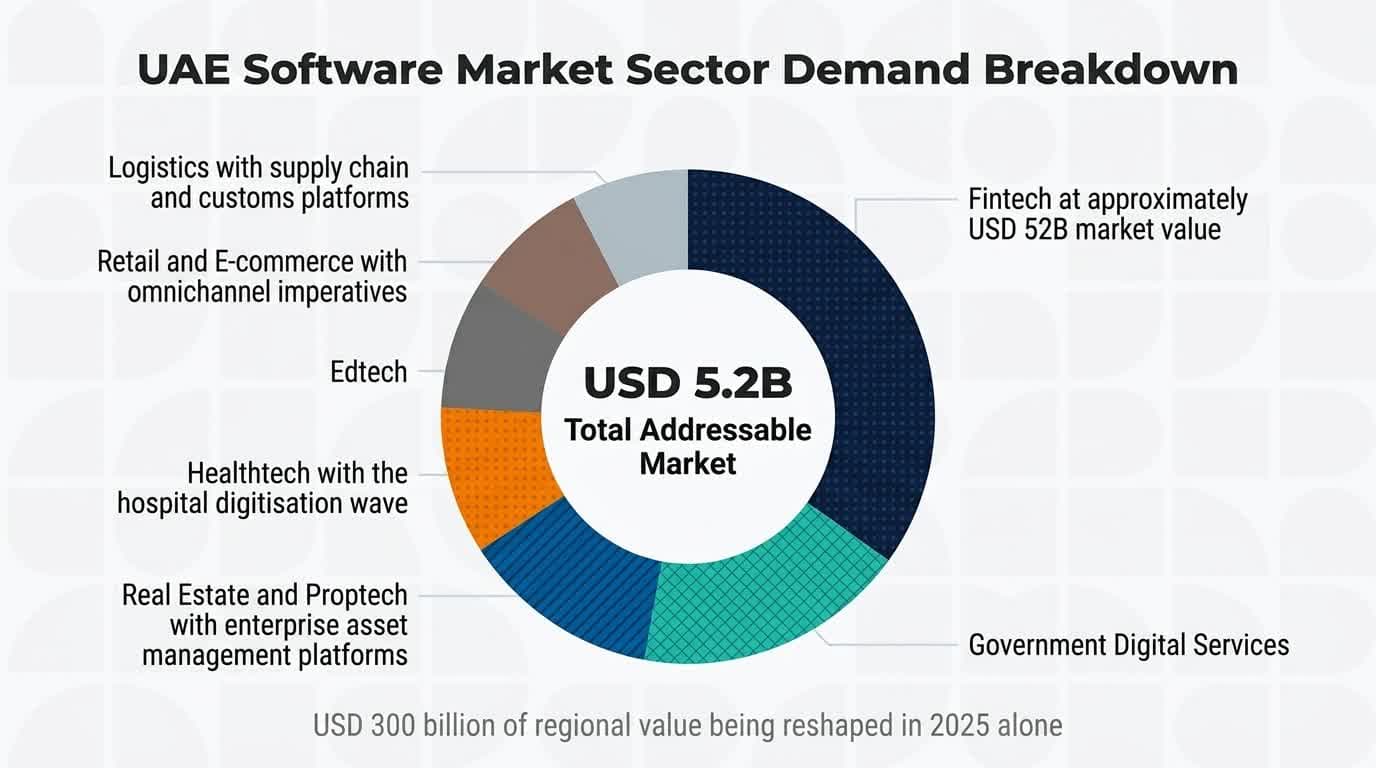
For technology providers entering this landscape, five primary sectors represent the bulk of addressable software budgets: fintech, government, real estate, logistics, and healthcare. Each sector possesses a distinct procurement profile and unique compliance benchmarks that vendors must navigate.
- Fintech: A USD 52 billion market by 2026, driven by regulatory sandboxes and anchored in financial free zones.
- Government: The largest single procurement block, governed by the digital authority architecture of individual emirates.
- Real estate and proptech: Portfolios managed by large conglomerates requiring unified tenant and asset platforms.
- Logistics: Supply chain, maritime, and customs platforms reflecting the region's position as a global trade hub.
- Healthtech: Digital health mandates, telehealth infrastructure, and electronic medical record integrations.
Fintech: the regulatory free-zone advantage
The financial technology sector is anchored by two financial free zones that operate as highly active regulatory sandboxes. The Dubai International Financial Centre (DIFC) functions under the Dubai Financial Services Authority, providing a dedicated licensing structure for software and artificial intelligence enterprises.
This DIFC framework allows technology startups to scale operations with zero per cent tax on qualifying corporate income. Abu Dhabi Global Market (ADGM) provides a parallel regulatory structure, with both jurisdictions offering sandboxes where software products can be trialled prior to full commercial release.
The scale of this vertical is historically significant. The broader national fintech ecosystem was valued at USD 52.07 billion in 2026, with projections suggesting it will reach USD 90.06 billion by 2031 at a compound annual growth rate of 11.58 per cent. While this incorporates transactions and assets, the underlying software engineering budget represents a substantial addressable market.
State-backed support for fintech began in earnest in 2017. Empirical evidence suggests that these sandbox environments and targeted free-zone incentives have directly influenced business survival and development rates within the region.
For engineering firms, this environment creates steady demand for payment gateways, automated compliance engines, and transaction platforms. All such systems must align with the strict data-residency mandates enforced by both DIFC and ADGM authorities.
Successful vendor procurement within this space requires specialised capabilities, including cloud-native architectures and secure data pathways. Development partners must also show deep familiarity with the regulatory standards set by local financial authorities.
Government: Smart Dubai and the digital authority architecture
The public sector remains the largest individual purchaser of software services across the Emirates. Initiatives led by Smart Dubai, alongside the Dubai Digital Authority and Abu Dhabi Digital Authority, continue to direct significant capital into public-sector modernisation.
International trade analyses identify e-government and public digital services as strategic investment priorities for the federation. These efforts focus on leveraging advanced network infrastructures, municipal automation, and connected systems to optimise public resources.
Procurement requirements in this domain extend far beyond standalone software applications. Bidding entities must demonstrate pre-existing integration capabilities with central platforms such as UAE PASS, Dubai Pay, and sovereign cloud systems.
Regional business analyses indicate that up to USD 300 billion of value is undergoing systematic restructuring. Consequently, public-sector buyers are actively reallocating capital budgets toward secure databases, sovereign cloud environments, and intelligent network management tools.
This state-led digital architecture offers a highly structured procurement process that provides greater predictability than traditional open tenders. However, the associated regulatory standards restrict participation to pre-vetted development teams with documented compliance records.
Real estate, logistics, and the cross-sector pattern
Beyond state projects and financial services, the logistics and real estate industries present major development pipelines. Dubai's position as an international transit hub drives steady demand for supply chain orchestration platforms, cargo tracking portals, and automated customs interfaces.
Simultaneously, the real estate and property technology sectors are characterised by large-scale enterprise developments. Semi-governmental developers and private asset managers regularly commission bespoke platforms for estate management, smart facility monitoring, and tenant portals.
A common thread across these industries is the strong influence of state-linked enterprises and stringent regulatory structures. Whether dealing with a free-zone firm, a municipal authority, or a sovereign logistics provider, procurement teams prioritise partners with deep cybersecurity and engineering capabilities.
Firms lacking these specialised competencies are generally confined to lower-tier, commoditised segments of the market. Success in high-value tenders remains linked to a vendor's documented compliance with regional data and security standards.
Healthtech: the hospital-digitisation wave
The regional healthcare sector is executing a systematic transition toward modern digital operating models. This shift generates ongoing opportunities for engineering teams capable of developing patient-management portals, telemedicine solutions, and integrated electronic record systems.
Directives from the Dubai Health Authority mandating digital record-keeping, alongside Abu Dhabi's health modernisation initiatives, have established a compliance-driven procurement landscape. This regulatory environment closely mirrors the strict operational structures observed in the financial services sector.
For software developers, the highest-value opportunities lie in complex system integrations and secure client-facing interfaces. Success requires rigorous alignment with local health data protocols, as well as a practical understanding of international data standards like HL7 and FHIR.
International engineering firms with healthcare credentials can successfully translate their experience to this market. However, they must carefully adapt their application architectures to satisfy local data residency laws and clinical storage regulations.
Edtech: the K-12 and higher-education digital layer
Educational technology is experiencing sustained growth backed by institutional capital commitments. Regulatory bodies, including Dubai's Knowledge and Human Development Authority and Abu Dhabi's Department of Education and Knowledge, supervise this evolving ecosystem.
Under their oversight, schools and universities increasingly commission customised portals for student tracking, parent communication, and remote learning. These systems require seamless local hosting and accessible user interfaces.
Higher education institutions, including regional universities and international branch campuses, represent another distinct consumer segment. These entities frequently procure custom systems for managing academic research, campus operations, and student records.
The procurement cycles in this vertical differ from corporate sectors, aligning instead with academic calendars and public budgetary windows. For software partners, valuable opportunities exist in developing systems that support right-to-left languages and meet modern accessibility standards.
While the primary education sector generates high-volume demand for standard administrative software, the higher education segment seeks bespoke solutions. These academic institutions prioritise secure, custom-engineered portals over off-the-shelf alternatives.
Retail and ecommerce: the omnichannel imperative
The retail sector represents a highly mature consumer market where software requirements focus on cross-channel operations and unified data platforms. Dubai's status as a commercial hub drives ongoing investments in transactional platforms, loyalty systems, and in-store integrations.
This competitive retail landscape is driven by exceptionally high consumer expectations for digital interfaces. As a result, businesses consistently allocate budgets to optimise their backend systems and checkout flows.
Development requirements typically concentrate on deep customisations for right-to-left languages, real-time inventory synchronisation, and unified customer databases. These data engines must operate in strict compliance with local consumer protection guidelines.
Procurement teams favour engineering partners who possess documented experience integrating enterprise commerce software with existing systems. Expertise in connecting storefronts with legacy warehouse databases is highly valued.
International developers often find this sector has lower entry barriers compared to highly regulated fields like healthcare or public administration. Procurement timelines are generally shorter, and compliance processes are more commercial in nature.
Data protection: the PDPL and what it means for software vendors
The UAE Personal Data Protection Law, established under Federal Decree-Law No. 45 of 2021, sets the baseline federal standards for managing user information. Technology vendors must account for these rules when designing data storage and application hosting architectures.
This federal statute governs all processing activities across the country, including those occurring within free-zone jurisdictions. It enforces strict regulations regarding user consent, data minimisation, breach notification protocols, and outbound international transfers.
Engineering teams must ensure their hosting configurations comply with local residency rules, especially when serving regulated clients. This is critical for systems handling financial, educational, or governmental datasets.
Furthermore, the DIFC maintains its own distinct data protection framework, separate from the federal law. This dual-regulatory model requires careful planning for developers serving both free-zone and mainland businesses.
For overseas software partners, key architectural decisions regarding encryption and hosting locations must be finalised early in the discovery phase. These structural choices must simultaneously satisfy both federal requirements and localised free-zone policies to avoid expensive redevelopment.
The talent pool: why IT recruitment is the 100,000-volume question buyers actually ask
When buyers in the UAE software market begin due diligence, the first question is rarely about technology stacks or pricing models. It is simpler and more urgent: can we actually hire who we need?
The demand volume data answers that question with remarkable clarity. The keywords "IT recruitment Dubai" and "software recruitment Dubai" combine for approximately 100,000 monthly buyer intent signals, dwarfing every other digital demand segment. In comparison, application development search segments reach 26,000, whilst web development draws 32,500 monthly queries.
The market is not asking whether to build software. It is asking whether it can staff the teams to build it.
The agency ecosystem
Recruitment in the UAE operates through a well-established agency ecosystem. For an IT services company in Dubai, Michael Page and Gulf Talent appear consistently as key players in technology hiring, particularly for mid-to-senior positions [3]. Relationships matter enormously, and the informal referral network often outperforms formal applications.
A recommendation from someone already employed at a target company carries significantly more weight than a CV submitted through a job portal. Other recruitment agencies in this space include Robert Half, Naukri, and Bayt.com.
The supply equation
The talent supply picture in the UAE is unlike almost any other market globally. The population stands at approximately 9.5 million, with around 88 per cent classified as expatriate. This demographic structure fundamentally shapes the recruitment landscape.
Unlike neighbouring Saudi Arabia, where nationalisation policies create specific constraints, the UAE operates an open labour market. The majority of technology professionals here are foreign-born and foreign-trained.
University pipelines feed this workforce through UAE University in Al Ain, Khalifa University in Abu Dhabi, and the Dubai campuses of international institutions. Indian and Nepali developers form a substantial portion of the professional workforce, reflecting broader regional migration flows over several decades. This South Asian cohort represents both the largest supply source and the baseline expectation for qualifications in mid-level positions.
The experience paradox
While "IT recruitment Dubai" search terms indicate massive market appetite, the reality of individual hiring decisions reveals a bifurcated pattern. Online developer discussions describe the local market as a unique mix of extremely senior enterprise roles and early-stage startups, with very little depth in the middle tier.
Senior developers with five or more years of experience are highly sought after, with candidates often advised to target the market only after accumulating regional experience [3]. Meanwhile, the market for entry-level and junior developers is characterised as extremely limited. Those possessing less than one year of experience are frequently advised to build skills elsewhere first [3].
This creates a structural challenge for buyers seeking to build development teams locally. The senior talent exists and is actively recruited, yet the junior pipeline remains constrained. Companies requiring larger teams face a bottleneck at the mid-level, where experience requirements exclude local graduates but local tenure has not yet accumulated.
Market distortions and structural constraints
Professional discourse reveals several structural tensions that buyers must understand. The market has become characterised by a rapid integration dynamic, where employers expect immediate productivity from new hires rather than investing in long-term professional development [6]. Referrals dominate hiring, and the majority of positions are filled through existing employee networks rather than public advertisements [15].
Career progression for expatriate professionals operates under constraints that domestic markets do not face. Senior professionals in large companies report that career advancement is sometimes limited by natural preferences for local nationals in management roles [15]. Additionally, base expectations are rising as talent competition intensifies across the region.
Visa pathways and talent retention
The UAE government has developed several distinct visa pathways to attract and retain highly skilled technical talent. These regulatory frameworks help mitigate local recruitment bottlenecks by simplifying long-term residency.
- Golden Visa: Long-term residence (five to ten years) for professionals meeting specific criteria, typically documented experience and an employment offer above a threshold salary. This pathway favours established senior talent and works as an effective retention tool for critical technical hires.
- Green Visa: Shorter-term residence for skilled workers and freelancers without requiring direct employer sponsorship. This mechanism enables more agile team composition and flexible project resourcing.
- Free zone employment passes: Highly flexible options for both employers and employees within specific zones, though they can sometimes limit mobility across different emirates.
Understanding these visa pathways is essential for any technical team-building strategy in the regional market. Navigating these options successfully allows organisations to secure critical skills whilst maintaining operational flexibility.
Market entry for foreign founders: setup, licensing, free zones, hiring
Foreign software founders entering the UAE face a binary choice. Each pathway carries distinct implications for ownership, taxation, and market access. For a software development company in the UAE, practitioners with direct experience of the process emphasise that the decision should be driven by client base and growth trajectory rather than promotional narratives about the Emirates' business environment.
Free zone versus mainland: the structural trade-off
The UAE's free zone ecosystem offers foreign software companies several structural advantages. Chief among these is 100% foreign ownership, which was historically unavailable in mainland structures [20].
Free zone entities also benefit from zero customs duty on re-exports and the ability to repatriate capital without restriction. For software firms whose clients are exclusively international, these provisions remove significant friction from cross-border operations.
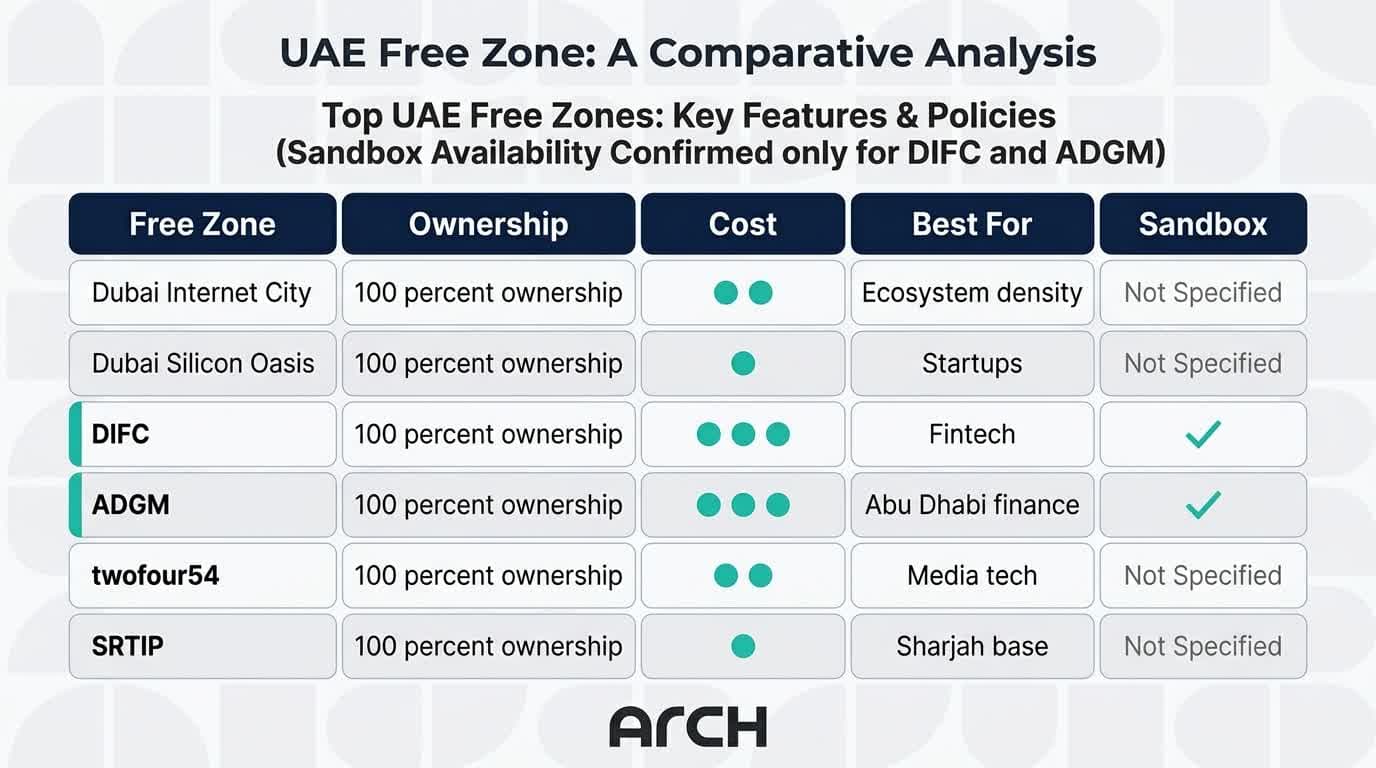
Free zone options for software companies:
- Dubai Internet City: Ecosystem density and networking with established technology firms; default choice for companies prioritising vendor relationships
- Dubai Silicon Oasis: Lower costs and a startup-oriented environment; attractive for earlier-stage operations
- DIFC: Financial free zone with fintech and AI regulatory sandbox; ideal for compliance-driven software ventures
- ADGM: Abu Dhabi financial free zone with parallel regulatory framework to DIFC
- twofour54: Abu Dhabi media and content-adjacent technology propositions
- SRTIP (Sharjah): Lower cost base while maintaining UAE residency
Dubai Internet City and Dubai Silicon Oasis emerge repeatedly in practitioner discussions as the most relevant free zones for software development activities [20]. Abu Dhabi's twofour54 serves a similar function for firms with media or content-adjacent software propositions, while Sharjah's Research Technology and Innovation Park (SRTIP) extends options for founders seeking lower cost bases while maintaining UAE residency [20]. For teams evaluating app development Abu Dhabi opportunities, the free zone choice directly affects which procurement channels are accessible.
Mainland setup, by contrast, provides access to the local UAE market and government contracts. Until recently, mainland structures required a local sponsor, typically holding 51 per cent of the entity. However, legislative reforms have expanded sectors eligible for 100% foreign ownership, and the calculus for software firms now depends heavily on whether government procurement is a target revenue stream [20].
For firms pursuing both local enterprise clients and international markets, a common approach involves establishing a free zone entity for international contracting paired with a mainland presence for domestic engagement. This dual-structure approach balances the administrative benefits of free zones with the direct market access afforded by mainland licensing [20].
Licensing requirements in practice
The licensing process for a software company in the UAE is straightforward in procedural terms but requires attention to jurisdictional specificity. A business licence application, evidence of physical office space (or a virtual office designation accepted by most free zones), and a bank account with capital deposit constitute the core requirements. Processing times vary from several days to several weeks depending on the zone and the completeness of the submission.
Corporate tax implications have become an increasingly material consideration following the UAE's introduction of a 9 per cent corporate tax on profits exceeding specified thresholds. Free zone status does not automatically exempt software companies from this tax, and founders should verify their free zone's specific tax treatment before assuming full exemption [20].
Hiring and talent acquisition
The UAE's software talent market presents a paradox: strong demand for experienced developers coexists with a hiring process that practitioners describe as relatively undemanding compared to Western markets [3]. Recruitment channels include Michael Page and Gulf Talent, both well-established in the Emirates, alongside direct applications through company career pages [3].
Referral networks carry significant weight, and the advice to "find someone already working there who can refer you" reflects the relationship-oriented character of professional hiring in the market [3]. Mid-level developers with approximately five years of experience are in particular demand [3]. Senior engineers with deep domain expertise are less commonly sought, a pattern that aligns with the market's structural emphasis on sales and distribution over technical building and R&D [6].
Engagement models in the UAE market
Engagement models in the UAE market typically follow three patterns: fixed-price projects for defined scopes, time-and-materials arrangements for evolving requirements, and dedicated development teams for long-term partnerships. The choice of model should align with project certainty, internal technical capability, and the speed of iteration required.
Foreign founders entering through free zone licensing should consider which engagement model most appropriately serves their client base and growth trajectory. For firms focused on web development UAE opportunities, the engagement model choice often depends on whether the client base is primarily local or international.
What does app development cost in the UAE? A project pricing guide
The question every technical decision-maker eventually needs to answer is the one the market intelligence literature rarely addresses directly: what should a software project in the UAE actually cost? The demand data describes the market size and structure.
The talent data describes the labour market. Neither, on its own, translates into a procurement budget, which is why this section draws the connection.
Cost benchmarks by project type. Market evidence from vendor-published pricing in the UAE provides directional reference points that buyers can use as initial budget anchors. Simple applications with limited customisation typically range from AED 20,000 to AED 70,000. Mid-range custom projects involving backend integration, Arabic localisation, and third-party API connections scale above this range.
Enterprise-grade deployments incorporating compliance architecture, multi-jurisdiction user management, and Arabic-first RTL design reach higher levels, with complexity-driven cost increases at each additional requirement layer. These are vendor-published reference points, not Arch quotes, and buyers should treat them as orientation markers rather than fixed quotes. Actual project cost depends on scope definition completeness, change management processes, and the engagement model chosen.
Hourly rate distributions by seniority. Freelance rates in Dubai vary by specialisation and client type. HTML and CSS work begins at approximately USD 50 per hour, scaling to USD 150 or more for senior practitioners with Arabic-language and RTL expertise. Enterprise clients pay substantially more than SME clients for equivalent work, reflecting the premium that buyer sophistication and budget size command in this market.
Cost drivers in the UAE context. Three factors most significantly affect project cost in the UAE beyond standard scope drivers. Applications serving domestic consumers or government-adjacent clients require RTL interface design, Arabic content direction, and locale-specific compliance that add scope and specialist vendor cost.
Backend complexity also plays a role, with projects involving payment processing, regulatory compliance, or integration with government systems such as UAE PASS or Dubai Pay carrying requirements that add both architectural complexity and specialist cost. Finally, projects for mainland clients involving government or financial sector data may require in-UAE data residency compliant hosting, which adds hosting cost relative to standard offshore deployment.
Fixed-price versus time-and-materials in the UAE context. Fixed-price engagements suit projects with stable, well-documented requirements where the buyer has high confidence in their scope definition. In the UAE context, where relationship dependency and scope evolution are common, buyers should ensure that fixed-price contracts include clear change-order processes, as requirements frequently expand during the procurement relationship.
Time-and-materials engagements provide flexibility for projects where scope evolves, but require stronger client-side project management. The UAE's business culture, which emphasises personal relationships and informal communication, can create scope ambiguity that makes T&M arrangements more prone to scope creep unless managed with explicit milestone frameworks.
The clone app alternative. One structural option that appears in the UAE vendor market is the use of business-model clone applications, where a vendor provides a pre-built application template modelled on established platforms such as Talabat, Careem, or Gojek. This approach can reduce time-to-market significantly compared to full custom development, with lower upfront cost for a comparable feature set.
The trade-off is reduced differentiation and potential compliance risk if the underlying template carries technical debt or IP exposure. For buyers in the UAE market evaluating build-versus-buy decisions, the clone app alternative is worth assessing alongside custom development quotes, particularly for business-model-validated concepts where speed of market entry is more critical than architectural uniqueness.
The relationship dependency
Any discussion of UAE market entry for software companies must address the structural role of relationships in commercial success. A practitioner with 25 years of experience selling technology services across the Middle East observes: "You can have a strong product, but if you don't have the right connections, you won't get past the procurement gate" [20].
This carries particular weight for software companies targeting government entities or state-adjacent enterprises, where procurement cycles are significantly slower than Western markets. Partnership alignment with government-led programmes is frequently cited as a prerequisite for meaningful market access [20].
For foreign software companies, this typically means formalising relationships with local sponsors or channel partners whose existing relationships provide the necessary procurement pathway. Direct sales without local partnership infrastructure involves substantial regulatory navigation and should be understood as a longer-term investment rather than a scalable entry model [20].
How do I evaluate vendors in the UAE?
Vendor evaluation in the UAE requires a rigorous, multi-layered framework to separate marketing claims from technical execution. Buyers should first verify free zone registration, as companies established in Dubai Internet City, Dubai Silicon Oasis, or the financial free zones of Abu Dhabi operate under distinct regulatory oversight. This registration provides a vital baseline credibility signal before deeper technical assessment begins.
The second phase involves requesting detailed case studies that demonstrate quantifiable outcomes rather than generic portfolio highlights. Following this, technical teams should conduct structured reference calls with previous clients who share similar industry verticals or compliance requirements. These direct conversations often reveal operational realities that marketing materials obscure.
Finally, negotiations must clearly define the ownership of source code, intellectual property rights, and concrete delivery milestones within the contractual agreement. Across all vendor tiers in the region, the primary hurdle remains differentiation. Whilst recommendations are plentiful, determining whether a firm possesses true delivery capability requires a level of due diligence that aggregator profiles simply cannot offer.
Which free zones are available for software companies in the UAE?
Dubai Internet City and Dubai Silicon Oasis serve as the primary free-zone destinations for dedicated software engineering activities within the emirate. Both jurisdictions offer 100 per cent foreign ownership alongside robust frameworks for intellectual property protection. Establishing a presence in these hubs signals institutional legitimacy, which is vital when navigating enterprise procurement cycles.
From an operational perspective, Dubai Internet City places businesses adjacent to established global technology entities, though this comes with higher commercial leasing costs. Conversely, Dubai Silicon Oasis offers a highly competitive cost-to-infrastructure ratio that appeals to growing technical teams. Both zones require physical office leases to satisfy economic substance rules, meaning founders must factor real estate commitments into their initial runway calculations.
For software firms developing media-adjacent or content-rich platforms, Abu Dhabi's twofour54 provides a specialised ecosystem. This free zone aligns licensing pathways with creative and digital production sectors, offering targeted support programmes. However, teams focusing purely on enterprise platforms may find the regulatory environment of the Abu Dhabi Global Market more aligned with their administrative needs.
Sharjah Research Technology and Innovation Park offers a highly viable, lower-cost alternative for engineering teams seeking to optimise capital. The park facilitates streamlined pathways for UAE residency visas while reducing the financial threshold for corporate registration. This makes it an attractive base for remote-first operations that require a formal regional entity without the premium overheads of central Dubai.
Selecting a specific free zone involves evaluating localised banking integration timelines and specific licensing pathways. Enterprise buyers increasingly use a vendor's registration status as a primary risk-assessment metric during initial due diligence. A clear, compliant corporate footprint within these recognised jurisdictions helps satisfy basic regulatory screening before deep technical audits begin.
What is the DIFC Innovation License and who is it for?
The Dubai International Financial Centre (DIFC) Innovation Licence provides a structured regulatory pathway for technology and artificial intelligence firms seeking a foothold in the region. This framework permits startups to establish a physical presence within the financial free zone while operating under the independent judicial system of the DIFC. Crucially, the structure grants access to a commercial registry with preferential setup rates, lowering the traditional barriers to entry.
Under this framework, qualifying technology businesses can apply to test proprietary software within the Dubai Financial Services Authority (DFSA) regulatory sandbox. This environment allows developers to pilot products under live conditions with real consumers, bypassing some of the standard compliance burdens during initial testing. The arrangement is particularly beneficial for platforms handling sensitive transactional data or complex financial models.
Abu Dhabi Global Market (ADGM) offers a parallel pathway through its RegLab, which provides similar sandbox exemptions under the Financial Services Regulatory Authority (FSRA). Both financial jurisdictions permit international tech companies to operate with complete foreign ownership and zero per cent corporate tax on qualifying income. These dual frameworks ensure that global engineering teams can deploy compliant applications within the local market before pursuing full commercial scale.
How does the UAE talent market differ from the Saudi market?
The UAE operates an open labour market where approximately 88 per cent of the population is expatriate, which fundamentally changes the regulatory overhead of recruitment. Unlike Saudi Arabia, where strict Saudisation quotas under the Nitaqat system dictate hiring ratios, the UAE does not impose nationalisation targets on private technology teams. This absence of domestic hiring mandates allows engineering leaders to source talent globally without regulatory friction.
However, this open-border approach introduces its own structural distortions, principally a severe experience paradox. The local market has become highly bifurcated, focusing almost exclusively on established professionals who can deliver immediate utility. While senior developers with five or more years of experience are in high demand, opportunities for junior or entry-level engineers are remarkably scarce.
This pipeline bottleneck means that growing organisations struggle to establish balanced, multi-tiered engineering structures. To mitigate this imbalance, the UAE government has introduced long-term residency pathways, including the Golden Visa and Green Visa schemes, specifically targeting senior technical specialists. These residency mechanisms help stabilise the senior talent pool, reducing the traditional transient nature of the expatriate workforce.
In contrast, the Saudi market focuses heavily on local capacity building, driven by nationalisation mandates that compel organisations to invest in junior Saudi developers. While this policy fosters a rapidly growing domestic talent base, it requires significant upfront training resources and constrains rapid international scaling. The UAE remains a highly fluid market for immediate, senior-heavy deployments, whereas Saudi Arabia represents a long-term investment in localised engineering infrastructure.
Furthermore, the recruitment mechanism within the UAE tech hub is highly insular, relying heavily on trust networks. The majority of senior engineering appointments are secured through professional referrals and established industry reputations rather than standardised job boards. Consequently, foreign firms entering the market must actively cultivate local network relationships to attract high-tier talent.
Can foreign software companies own 100 percent of their UAE entity?
International software firms can indeed retain 100 per cent ownership of their UAE entities by establishing within the country's extensive free zone network. This structural framework bypasses historical requirements for local majority partners, providing a direct pathway for foreign capital. Dedicated hubs such as Dubai Internet City and Dubai Silicon Oasis serve as specialised ecosystems tailored specifically for software engineering and technological development.
For enterprises focused on media or content-adjacent software architectures, Abu Dhabi's twofour54 offers a comparable regulatory environment. These jurisdictions provide complete capital repatriation alongside robust frameworks for intellectual property protection. However, operations within a free zone generally restrict direct physical trade with the mainland UAE market without an intermediary.
Firms seeking direct access to local government contracts and mainland enterprise clients often opt for a mainland corporate structure. Establishing a mainland entity allows unrestricted domestic engagement across all emirates, though it requires compliance with mainland regulatory bodies. For many international organisations, a dual-entity model offers an effective framework for market penetration.
This hybrid strategy pairs a free zone setup for international contracting with a mainland branch for domestic delivery. Technical decision-makers must weigh the administrative overhead of maintaining dual licences against the commercial value of local public sector tenders. Navigating these options early in the planning phase ensures long-term operational flexibility.
Research methodology
The analytical foundation of this publication is built upon a dataset of 566,800 monthly buyer intent signals captured across 959 unique search terms in the UAE software market. This quantitative footprint was assessed to evaluate geographic concentration, talent demand, and competitive saturation across the Emirates. The scope specifically isolates the distinct demand profiles of Dubai, Abu Dhabi, and Sharjah to map regional procurement behavior.
The research applies specific metrics, including a competitive intensity index, to evaluate market opportunity across key software development segments. For instance, the analysis compares the low 14.6 competitive intensity score of Dubai's app development segment against traditional software benchmarks that frequently exceed scores of 40 or 50. By synthesizing these volume metrics with qualitative inputs from directories, forum discussions, and recruitment trends, the paper establishes a realistic benchmark of vendor saturation.
The research triangulates market size projections extending from 2025 to 2033 with practitioner perspectives on licensing, local hiring, and regulatory frameworks. It integrates public commercial guides, global research databases, and developer community insights to identify genuine procurement activities versus casual inquiry. This methodology ensures that the findings reflect the practical realities of the UAE's dual free-zone and mainland corporate architectures.
FAQs
What is the competitive intensity of the app development market in Dubai?
The app development segment in Dubai offers a clean market opportunity, carrying an average competitive intensity score of 14.6 against 74,150 monthly buyer intent signals. This score is significantly lower than the 40 to 50 competitive intensity seen in other segments. The local search landscape is primarily dominated by offshore agencies and recruitment platforms rather than specialist development firms.
How does the software market demand in Dubai compare to other emirates?
Dubai comprehensively dominates the UAE software market, commanding approximately 78 percent of high-volume demand. In comparison, Abu Dhabi contributes a quieter 3,000 monthly buyer intent signals across web and app queries, while Sharjah adds roughly 1,000. This extreme geographical concentration makes Dubai the primary theatre for software market entry strategies.
Why is IT recruitment such a significant concern for software buyers in Dubai?
IT recruitment represents the single most saturated demand segment in the UAE software market, carrying approximately 100,000 monthly buyer intent signals. This massive volume dwarfs the software vendor demand segment, which is capped at just 5,000 monthly signals. Consequently, the market's primary bottleneck is staffing qualified teams rather than vendor selection itself.
What are the key regulatory drivers of custom software demand in the UAE?
Regulatory architectures in financial free zones like the DIFC and ADGM create compliance-driven demand for custom software, particularly in fintech. Additionally, healthcare entities must comply with Dubai Health Authority mandates, while federal frameworks like the Personal Data Protection Law shape hosting requirements. These strict guidelines concentrate budgets in heavily regulated sectors.
About the Author
Hamish Kerry is the Marketing Manager at Arch, where he translates complex mobile frameworks and digital product analytics into pragmatic, outcome-led strategies for technical decision-makers and founders. He rejects unproven industry hype, relying instead on empirical data and user-centred design principles to guide teams through critical software architecture choices. His work centers on aligning cross-functional teams to deliver accessible, high-impact digital products that yield measurable business value.
With deep expertise in mobile framework analysis and emerging technologies, Hamish focuses on cutting through transactional sales rhetoric to expose the real-world operational challenges of digital scaling. He supports startup founders and enterprise buyers in navigating the structural realities of software procurement, talent acquisition, and regional regulatory compliance. By prioritizing accessibility and end-user value, he ensures technology investments are both technically sound and commercially viable.
References
- [1] Quora: How do I hire a dedicated Android app developer in Dubai
- [2] Ken Research: UAE business software market (USD 5.2B by 2030, 12.5% CAGR)
- [3] Quora: How do I find a software developer job in the UAE (Michael Page, Gulf Talent)
- [4] Quora: What is the cost of app development in Dubai (ITC Infotech, Emonics, UAE Software Solutions)
- [5] Reddit r/dubai: What are some top Software Development companies based in Dubai
- [6] LinkedIn: Key Challenges Faced by a Software Development Company in Dubai
- [7] Quora: Which is the best IT software development company in Dubai
- [8] Reddit r/dubai: Software dev companies red flags
- [9] Mordor Intelligence: UAE Fintech Market (USD 52.07B 2026 to USD 90.06B 2031)
- [10] Schiliro: Fintech in Dubai: Development and Ecosystem
- [11] US Trade Government: United Arab Emirates Digital Economy
- [12] PwC: Transformation Accelerates as Middle East Businesses Reinvent for the Decade Ahead
- [13] DIFC: AI, FinTech and Innovation Firms
- [14] Zarrouk: Economic and Technological Determinants of FinTech Startups' Success and Growth in the UAE
- [15] Quora: Software Development Jobs in Dubai
- [16] Quora: I have 7 years of experience in Full Stack development — what salary should I be expecting in Dubai?
- [17] Grand View Research: UAE Enterprise Software Market (USD 4,019.8M 2025 to USD 11,042.5M 2033)
- [18] Grand View Research: Middle East Software Market (USD 13.6B in 2024)
- [19] Mordor Intelligence: UAE ICT Market (USD 52.22B in 2025)
- [20] Morgan Lewis: Opportunities and Challenges in the Tech Markets of the UAE and Saudi Arabia