



Startup MVP Development UK: The Founder's Guide.
A UK startup guide to developing an MVP. Learn how to validate your idea, prioritise features, and launch a product users will love.
Startup guide for MVPs.
Share Via:
An MVP is the smallest working product that proves people want what you plan to build. That distinction carries real money behind it: 42% of startups fail because there was no market need for what they made, according to Modall's 2025 breakdown of MVP delivery. Startup MVP development UK founders commission too often skips the proof and ships a shrunken version of the finished thing instead.
This guide covers what to build first, what moves your budget, how long development takes now that AI tooling is in the mix, and the numbers that tell you to carry on or stop.

Every note on that wall is a feature someone is emotionally attached to. Most will not ship.
What an MVP Actually Means
An MVP tests one hypothesis: that a specific group of people will change their behaviour to use what you have made. Everything else can wait.
That makes it different from a prototype, which demonstrates an idea without real users behind it, and from a proof of concept, which checks whether something can be built at all. Getting to that prototype quickly is a discipline of its own, which is where rapid prototyping comes in. A prototype answers "does this make sense?". An MVP answers "will anyone use this?".
The confusion is expensive, and it is where most startup MVP development UK briefs go wrong. Treat an MVP as version one of the real product and you inherit every version-one obligation: full onboarding, admin tooling, edge cases, settings screens. None of that tests the hypothesis. It only delays the moment you find out whether the hypothesis was right.
Why Most Startups Fail Without an MVP
The failure data points at demand, not engineering. RaftLabs' 2026 guide puts it starkly: 43% of failed startups built something nobody actually wanted. Modall's 42% no-market-need figure from 2025 says the same thing from a different angle.
Neither number describes bad code. They describe teams who found out too late. The technology worked; the assumption underneath it did not. That gap is what MVP software development is built to close.
Running the experiment first pays back measurably. Ksoft Technologies reported in 2026 that 70% of startups adopting an MVP approach see higher success rates, citing widely referenced McKinsey data. Presta's 2025 roadmap guide found a disciplined MVP plan cuts time to market by around 40% and development cost by 30% to 50%.
Speed compounds too. Chrono Innovation's 2026 analysis found that launching just 5% earlier lifts return on investment by 13%. Every week you spend building something unvalidated costs twice: once in cash, once in the return you never earn.

The conversation that decides what gets built, held before anything gets built.
What Really Drives Your MVP Budget
Scope drives cost. Nothing else comes close.
Published market figures for startup MVP development UK builds span a wide band, which tells you something in itself. Adevs' 2026 cost guide puts custom MVP builds anywhere from $15,000 to over $150,000. That is not a pricing signal, it is a scoping signal: the same idea costs an order of magnitude more or less depending on how much of it you insist on building before launch.
Four things move the number more than anything on a rate card. How many user roles the product supports. Whether it needs payments, regulated data, or third-party integrations. Whether it runs on web only or web and mobile. And whether the core loop can be tested with one screen or needs six.
Cut a role, drop an integration, ship web first, and the estimate moves before anyone writes a line of code.
Our published figures give you a qualifying signal rather than another "it depends". Our Clutch profile lists a minimum project size of $50,000 and an hourly band of $100 to $149, against a 4.7 rating across 30 reviews. If your startup MVP development UK budget sits well below that minimum, a leaner route is the honest answer, and we would rather say so in a short conversation than after a proposal.

Scope, on paper, where changing your mind is still free.
Startup MVP Development UK Timelines, Realistically
Weeks, not quarters, is now a fair expectation for a tightly scoped build. A focused starting engagement like Arch Kick Start is built for exactly that pace.
Sprint-based delivery makes the timeline legible. AI Infra Link's 2026 write-up describes shipping an MVP across six two-week sprints, each one delivering a working component rather than a status update. Twelve weeks, six checkpoints, six chances to change your mind before the money is gone.
AI tooling has pulled that in further. Modall's 2025 analysis found delivery timelines compressed by 40% to 60% where AI-assisted development is used properly. A build that took five months in 2023 can land in eight to ten weeks now, provided the scope holds.
The variable that wrecks timelines is not the team's speed. It is scope changing mid-build. A feature added in sprint four costs the sprint plus everything it touches.
Scoping the One Core Feature Loop
Find the single loop where your product creates value, then build only that.
Every product has one: a user arrives, does a thing, gets a result worth coming back for. A marketplace matches a buyer to a seller. A booking tool turns an enquiry into a confirmed slot. Everything else on your roadmap exists to support that loop, decorate it, or administer it.
Write the loop down as one sentence. If you cannot, the scope is not ready and no delivery partner can rescue it. If you can, you have your build list, and every proposed feature now faces one question: does this make the loop happen more often, or not?
Given Chrono Innovation's 2026 finding that a 5% earlier launch lifts ROI by 13%, each feature you defer past launch has to justify itself against the return you lose by waiting. Most cannot.
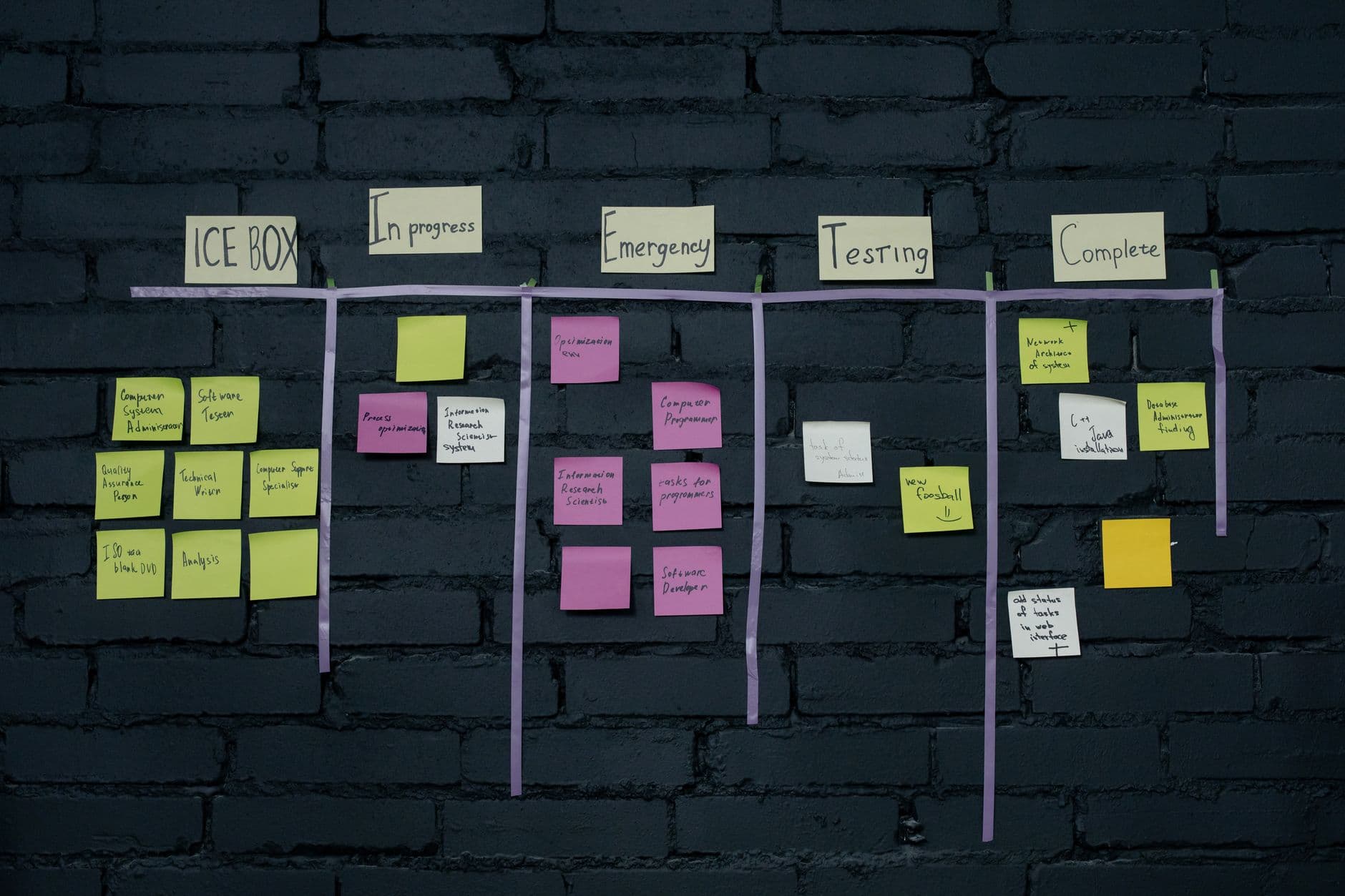
Six sprints, six chances to change course while the money is still in the bank.
The Build Process, Stage by Stage
Five stages take an idea to a live product with users on it, and most startup MVP development UK builds run through them in this order, which is the way we work.
Discovery. Pin down the loop, the audience, and the one metric that would prove the hypothesis. Usually one to two weeks in a discovery sprint, and it saves more time than it costs.
Design. Enough interface to make the loop usable, no more. Onboarding flows and settings screens can wait for evidence anyone wants them.
Build sprints. Two-week cycles, each shipping something you can click, per the six-sprint pattern AI Infra Link documented in 2026. You see progress fortnightly rather than hoping.
Test. Real users on real devices before launch. Not a QA formality, an early read on whether the loop lands.
Launch and measure. Ship to a defined audience with instrumentation already in place.
Founders focused on building an MVP quickly tend to compress design and testing. The stage worth protecting is discovery, because that is the one that decides whether the other four were worth doing.
How AI Changed MVP Delivery in 2026
AI-assisted development has moved the economics of startup MVP development UK teams can now offer, though not in the way the marketing suggests.
The productivity data is real. Chrono Innovation's 2026 guide cites a 95-developer study where AI assistance made developers 55% faster. Second Talent reported in 2026 that AI-assisted developers open 60% more pull requests, with 84% of developers now using AI tools. Index.dev's 2025 figures put coding time saved at 30% to 60%.
The caveat matters more than the headline. Second Talent's 2026 research also found trust in AI output lagging well behind adoption. More code shipped faster is only an advantage if someone senior is reading it, because an MVP that collapses under its first fifty users has failed its own test.
What changes is the arithmetic of scope. When the build is faster, the cost of a wrong assumption drops, and you can afford to test earlier rather than build more.

The build is the easy part. Knowing what to build is what the MVP is for.
The Metrics That Prove Your MVP Worked
Activation and retention decide it. Downloads and signups do not, however good they look in a startup MVP development UK progress update.
Activation asks what share of new users complete the core loop at least once. Retention asks how many come back and do it again a week later, then a month later. A flat curve after the first week is the signal you launched to learn about; one that drops to zero is an answer, not a failure.
Speed of response separates the teams that get there. Presta's 2025 roadmap research found that teams iterating on user feedback within the first 30 days are three times more likely to reach product-market fit. The MVP is not the experiment. The first month after it is. When the numbers hold, the next question is what happens once the MVP proves itself.
Set your go, pivot or stop thresholds before launch, while you are still honest. Decide which retention number means carry on and which means stop. Deciding afterwards means deciding with your ego in the room.
Startup MVP Development UK: Team, Offshore or No-Code
Three routes, three honest trade-offs.
No-code is the fastest way to test a loop built on forms, workflows or matching. If your hypothesis is about demand rather than technology, it may answer the question in weeks. It runs out of road at custom logic, real scale, and anything a regulator will look at.
Offshore buys hours cheaply. It costs coordination, which is exactly what a fast-changing MVP scope demands most. Time zones that delay a scoping answer by 24 hours turn a two-week sprint into three.
A UK team costs more per hour and gives you overlapping working hours, contracts under UK law, clear IP ownership, and someone who can sit in a room when scope changes. On a build measured in weeks, decision latency matters more than day rate arithmetic. If the loop lives on a phone, you can hire mobile developers on that same team.
There is a right answer for your loop, your sector and your timeline, and it is usually clear within one conversation. If your product lives in a browser, web app developers in the UK can tell you which of the three you actually need.
Frequently Asked Questions
What Does Startup MVP Development UK Typically Cost?
Startup MVP development UK costs are set by scope, not a standard rate. Published market figures give a sense of the spread: Adevs' 2026 guide reports custom MVP builds ranging from $15,000 to over $150,000. The drivers are user roles, integrations, whether payments or regulated data are involved, and whether you need web and mobile at launch. Cutting scope moves the figure far more than anything else.
How Long Does it Take to Build an MVP?
A tightly scoped MVP typically ships in weeks rather than months. AI Infra Link's 2026 model describes six two-week sprints, each delivering a working component, which puts a full build around twelve weeks. Modall's 2025 analysis found AI-assisted delivery compressing timelines by 40% to 60% against traditional approaches. The main risk to any timeline is scope changing mid-build, since a feature added late costs its own sprint plus everything it touches.
What is the Difference Between an MVP and a Prototype?
A prototype demonstrates an idea; an MVP tests demand with real users. A prototype can be clickable screens with nothing behind them, useful for showing an investor or a colleague what you mean. An MVP works end to end for one core loop and goes live to actual users who can succeed or fail at it.
How do I Decide Which Feature to Build First?
Build the single loop where value is created, and defer everything else. Write it as one sentence: a user arrives, does something, gets a result worth returning for. Any feature that does not make that loop happen more often waits for launch evidence. Chrono Innovation's 2026 research found a 5% earlier launch lifts ROI by 13%, so each deferred feature has to beat the return lost by delaying.
Who Owns the Code When an Agency Builds my MVP?
You should, and it belongs in the contract before work starts. Full assignment of intellectual property on delivery, source code in a repository you control, and no dependency on proprietary tooling you cannot take elsewhere. UK contracts under UK law make this straightforward to enforce, which is one practical reason founders weigh a domestic team against a cheaper hourly rate abroad. Ask any prospective partner to show you the IP clause first.
Your Next Move
Write your core loop down in one sentence. If that sentence is hard to write, the scope is the problem and no build team will fix it for you.
Then decide your retention threshold before you launch, not after. Presta's 2025 research on 30-day iteration cycles found that teams responding to user feedback fast are three times more likely to reach product-market fit, and you cannot respond fast to a number you have not agreed on.
Startup MVP development UK founders get right starts with a scoping conversation, not a feature list. If you want a second opinion on your loop before you commit budget to it, a short conversation costs nothing and tends to save a sprint or two.
About the Author
Hamish Kerry is the Marketing Manager at Arch, where he’s spent the past six years shaping how digital products are positioned, launched, and understood. With over eight years in the tech industry, Hamish brings a deep understanding of accessible design and user-centred development, always with a focus on delivering real impact to end users. His interests span AI, app and web development, and the transformative potential of emerging technologies. When he’s not strategising the next big campaign, he’s keeping a close eye on how tech can drive meaningful change.
You can catch up with Hamish on LinkedIn
Sources
- Modall, MVP Development for Startups: Cost, Timeline, and Process (2026) (Modall, 7 December 2025).
- RaftLabs, MVP Development for Startups: The Complete 2026 Guide (RaftLabs, 3 March 2026).
- Chrono Innovation, MVP Development for Startups: The 2026 Guide (Chrono Innovation, 2 March 2026).
- Presta, The Complete MVP Roadmap Guide for 2026 (Presta, 29 December 2025).
- Ksoft Technologies, How to Build an MVP in 2026: Complete Startup Strategy (Ksoft Technologies, 29 April 2026).
- Adevs, MVP Development for Startups: Cost, Timeline and 90 Day Plan (Adevs, 17 May 2026).
- Second Talent, AI Developer Productivity Tools for 2026 (Second Talent, 9 May 2026).
- Index.dev, Developer Productivity Statistics with AI Tools (Index.dev, 24 November 2025).
- AI Infra Link, Startup Sprints: 5 Steps to Faster, High-Impact Results in 2026 (AI Infra Link, 6 June 2026).