



AI Application Development: What The 2026 Evidence Shows.
Vibe coding to enterprise AI — how does AI actually change software development? Evidence-first guide to AI application development.
AI Application Development: What The 2026 Evidence Shows.
Key Takeaways
- AI application development means building AI-powered products; AI-assisted development means using AI to build any product. The search term covers both.
- Measured gains are real but conditional: 24% more merged PRs at Microsoft, 19% at Atlassian, and a modelled 39% first-year return in the DORA work.
- Experienced engineers on mature codebases have shown flat or negative speed-ups, so context decides the outcome.
- Code duplication rose 81% in GitClear's 2026 analysis, which makes review discipline the constraint, not typing speed.
- Cost in AI application development is mostly a risk question. Evaluation rigour decides whether a build lands on plan.
AI application development is the work of designing, building and running software whose core behaviour depends on an AI model, covering discovery, data, model selection, integration, evaluation, deployment and monitoring. That full span of work is what our AI software development solutions are built to cover. The phrase carries a second meaning too, because plenty of people searching it mean using AI to help build software of any kind. Both matter, and the 2026 research says something uncomfortable about the second one.
The headline number first. A study of Microsoft's early-2026 rollout of command-line AI coding agents found adopters merged roughly 24% more pull requests than they otherwise would have (arXiv, 2026). That is real. It is also not the whole story, and the rest of this guide is about the parts most pages leave out.

Two people, one screen. Still the most dependable review tool anyone has shipped.
What is AI Application Development?
AI application development covers everything needed to take an AI-powered idea into live, maintained software. You define the problem, get the data into shape, pick a model, wire it into a product, evaluate whether it behaves, ship it, then watch it in production because model behaviour drifts in ways ordinary code does not.
The difference from conventional software is evaluation. A normal feature either works or throws an error. An AI feature can return a fluent, confident, wrong answer, and nothing in your stack objects. That single property reshapes the whole lifecycle.
AI-Powered Apps vs AI-Assisted Building
Two different jobs share one search term, and conflating them causes bad decisions.
Building AI-powered apps means the product itself uses a model: a support assistant, a document classifier, a recommendation engine. The hard parts are data, evaluation and guardrails. These shapes are much of how businesses are putting AI to work today.
AI-assisted building means your engineers use AI coding tools to ship faster, whatever the product does. The hard parts are review capacity and code quality. This is the way AI is reshaping how software gets built, and the evidence on it is mixed.
You can do either without the other. Most teams end up doing both, which is why the evidence below applies to a plain booking system just as much as to a model-powered one.
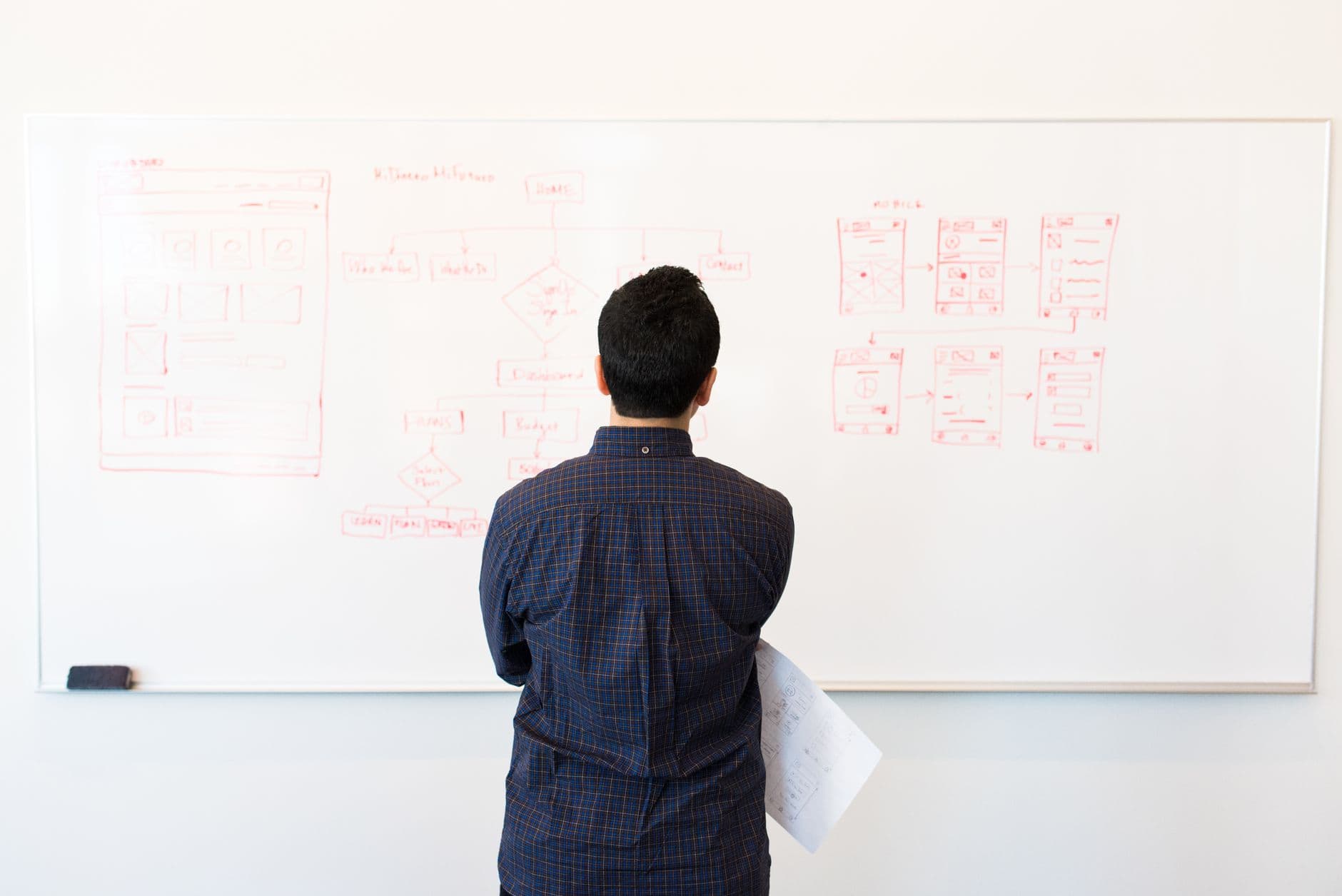
Working out which of the two jobs you are actually doing. Worth ten minutes and a marker pen.
Does AI-Assisted Development Actually Speed Delivery?
Yes, measurably, under the right conditions. Three separate 2026 findings point the same way.
Microsoft's rollout study put adopters at roughly 24% more merged pull requests, with uptake spreading through peer networks rather than mandates (arXiv, 2026). Atlassian reported that repositories adopting its AI dev agent merged 19% more pull requests per month, with developers saving an estimated two to three hours each week on coding and review (Atlassian, 2026).
The DORA ROI work models a first-year 39% return on AI-assisted development for a 500-person organisation, and its argument is the interesting bit: returns come from clearing bottlenecks and strong engineering foundations, not from the tools by themselves (InfoQ, 2026).
Read that carefully. The tool is not the cause. It is an amplifier applied to whatever process you already have.
Where The Productivity Story Gets Complicated
Now the part vendor guides skip.
METR's follow-up developer productivity work found experienced open-source contributors still showed negative or flat measured speed-ups from AI, in the region of minus 4% to minus 18%, which underlines how heavily gains depend on context and on how the tools are used (METR, 2026). Deep familiarity with a codebase is itself a speed advantage, and AI suggestions can interrupt it.
Then there is the queue. Team leads report Time-to-PR improvements of 48% to 58% with AI coding assistants, but AI-generated pull requests wait four to six times longer for review (SD Times, 2026). Writing got faster. Reading did not. The bottleneck moved rather than disappeared.
A survey of 2,989 developers found productivity from AI coding assistants is multi-dimensional, with long-term factors like retained technical expertise and ownership mattering as much as short-term output (arXiv, 2026). Shipping more this quarter may not be a win if nobody understands the system next year.
Somewhere in that diff is a pull request waiting six times longer than the one a human wrote.
Keeping AI-Assisted Code Maintainable
GitClear's analysis found code block duplication up 81%, while refactored "moved" code collapsed to 3.8% of changed lines (GitClear, 2026). Those two figures describe one behaviour: the copy is cheap, so nobody consolidates.
Three habits keep that in check.
Keep review capacity honest. If output rises 24% and reviewers do not, the queue absorbs the gain. Size the review lane to the new throughput.
Make tests the contract. Generated code is easy to accept and hard to trust. Tests written against intent, not against the generated implementation, are what let you accept it quickly.
Keep architecture human-owned. Models are strong at local work and weak at deciding what the system should be. Naming things, drawing boundaries and refusing scope stay with your engineers.
The AI Application Development Lifecycle
Seven stages, each with a decision that tends to get skipped.
- Discovery. Name the user problem and the failure you can tolerate. If a wrong answer is unacceptable, an AI application may not be the right shape.
- Data. Find it, clean it, check you are allowed to use it. This stage is where schedules go.
- Model selection. See the criteria below.
- Integration. Prompts, retrieval, tools, fallbacks. Design for the model being unavailable or wrong.
- Evaluation. Build a graded test set before launch, not after the first complaint.
- Production. Rate limits, cost ceilings, logging, a rollback that works.
- Monitoring. Track quality, not just uptime. Behaviour drifts silently.
The DORA finding applies here as much as to tooling: the teams that get returns are the ones whose foundations were already sound (InfoQ, 2026).
How to Choose The Right AI Model
Model choice is a trade-off across six axes, and there is no default answer.
- Reliability. How often is it right on your data, judged by your evaluation set rather than a public benchmark?
- Cost. Per call, at your real volume, with a ceiling that stops a bug becoming an invoice.
- Latency. A two-second wait is fine in a back-office tool and fatal in a checkout.
- Deployment method. Hosted API, private deployment or self-hosted, decided by data sensitivity and compliance.
- Transparency. Can you see what it was trained on, versioned, and told when it changes?
- Guardrails. What stops a bad output reaching a user, and who is accountable when one does?
Start with the smallest, cheapest model that passes your evaluation set. Scale up only when it fails.
From Prototype to Production
Prototypes are easy now. A working demo proves the idea is plausible, not that it survives real users, real data and real load. Most AI application development effort lands after that demo, not before it. A production build like H2OiQ spends most of its life in exactly that phase.
This is web app development in the UK at full lifecycle depth. Arch designs and builds web and mobile applications through to production, so the same team that shapes the prototype owns evaluation, deployment and monitoring afterwards. That continuity is the point. Our AI-assisted product development approach uses AI where the evidence supports it, and keeps human review where the evidence says it still matters, which the METR results suggest is a good deal of the time (METR, 2026).

Production, where a promising demo finds out what it is actually made of.
What Building an AI Application Costs And Takes
Most pages answering this give you a component breakdown and a range, usually in US dollars, usually from a vendor with an interest in the number. That framing treats cost as a budgeting exercise. It is closer to a risk question.
What actually decides the bill is whether the work lands on plan. Booking a discovery phase that surfaces the risky parts before any code is written is what makes that plan realistic. The DORA modelling ties returns to engineering foundations rather than tool spend (InfoQ, 2026), and the review-queue effect shows how a project can look fast and still miss its date (SD Times, 2026). Duplication compounds the same way (GitClear, 2026).
So the questions worth asking a partner are about process. How do you evaluate model output? Who reviews generated code, and how fast? What happens when the model is wrong in front of a customer? Scope, evidence and honest sequencing are what keep a build inside its estimate. Those are the questions that separate a capable artificial intelligence development company from a hopeful one.
Where to Start With AI Application Development
Pick one workflow where a wrong answer is survivable, define what "good" means as a test set, and build the smallest thing that passes it. That is the cheapest way to learn whether AI application development suits your problem at all. Done well, that is how you get an AI MVP off the ground without betting the budget on an unproven idea.
If you would rather talk it through than guess at it, a short conversation about your idea, your data and your constraints will tell you more than another pricing guide will. That conversation is also the front door to our bespoke development services.
Frequently Asked Questions
What is AI Application Development?
AI application development is the process of building software whose core behaviour depends on an AI model, from discovery and data preparation through model selection, integration, evaluation, deployment and monitoring. It differs from conventional development mainly in evaluation, because an AI feature can return a fluent answer that is confidently wrong rather than simply failing. That property shapes every other stage of the build.
Does AI Really Make Software Teams Faster?
Often, but conditionally. Microsoft's 2026 rollout study found adopters merged around 24% more pull requests, and Atlassian reported 19% more merged PRs per month with two to three hours saved per developer weekly. METR's 2026 work, though, found experienced contributors showing flat or negative speed-ups. The DORA modelling attributes returns to engineering foundations rather than the tools themselves.
Can AI Build a Whole Application Without Engineers?
Not dependably today. AI is strong at local, well-specified work and weak at architecture, trade-offs and knowing when a requirement is wrong. The 2026 evidence points at review as the constraint: SD Times reports AI-generated pull requests waiting four to six times longer for review, so removing engineers removes the very step that makes the output safe to ship.
How Do You Keep AI-Generated Code Maintainable?
Review discipline, tests and human-owned architecture. GitClear's 2026 analysis found duplication up 81% and refactored code down to 3.8% of changed lines, which happens when generated code is accepted faster than it is consolidated. Size review capacity to your new throughput, write tests against intent rather than the generated implementation, and keep boundaries and naming with your engineers.
How Do You Choose an AI Model For an Application?
Judge six things against your own evaluation set: reliability on your data, cost at real volume, latency your users will accept, deployment method given your data sensitivity, transparency about versions and training, and the guardrails that stop a bad output reaching a customer. Start with the smallest, cheapest model that passes, and scale up only when it fails.
What Does an AI Application Cost to Build?
It depends on scope, data readiness and how much evaluation the use case demands, so any published range is market noise rather than an estimate for your project. The more useful framing is risk: the 2026 research links overruns to weak foundations, review bottlenecks and accumulating duplication. A short conversation about your problem and your data will produce a more honest answer than a calculator.
About the Author
Hamish Kerry is the Marketing Manager at Arch, where he's spent the past six years shaping how digital products are positioned, launched, and understood. With over eight years in the tech industry, Hamish brings a deep understanding of accessible design and user-centred development, always with a focus on delivering real impact to end users. His interests span AI, app and web development, and the transformative potential of emerging technologies. When he's not strategising the next big campaign, he's keeping a close eye on how tech can drive meaningful change.
You can catch up with Hamish on LinkedIn
Sources
- Adoption and Impact of Command-Line AI Coding Agents: A Study of Microsoft's Early 2026 Rollout of Claude Code and GitHub Copilot CLI (arXiv, 1 July 2026).
- The AI-native SDLC is paying off: 19% more PRs and 2-3 hours saved per developer per week (Atlassian, 31 May 2026).
- New DORA Report Claims Strong Engineering Foundations Drive AI Return on Investment (InfoQ, 11 May 2026).
- AI Coding Assistants in 2026: Avoiding Pitfalls and Maximizing Value (SD Times, 22 May 2026).
- The Maintainability Gap: AI Code Quality in 2026 (GitClear, 15 January 2026).
- We are Changing our Developer Productivity Experiment Design (METR, 24 February 2026).
- Beyond the Commit: Developer Perspectives on Productivity with AI Coding Assistants (arXiv, 3 February 2026).